Master of Physician Assistant Studies (MPAS)
Communication with the PA Program / Referral for Emotional Hardship
Open communication between the Program and students is essential to an amicable and successful learning and working environment for all. Students are encouraged to communicate with program faculty and staff at any time for professional or academic help and advice. RVU email is the official source of communication between the Program and students. Students are required to check their RVU email daily.
If a student experiences personal emotional hardship during their tenure at RVU, several mental health and wellness services are available. Please refer to the sections entitled “Educational Support” and "Mental Health and Wellness” within the University Handbook Student Affairs section. PA-assigned advisors can help direct students to the appropriate resources.
Graduate Competencies
Patient Care: Provide patient-centered care that is compassionate, appropriate, and effective for the treatment of health problems and the promotion of health.
Medical Knowledge (“Knowledge for Practice”): Demonstrate knowledge of established and evolving biomedical, clinical, epidemiological, and social-behavioral sciences, as well as the application of this knowledge to patient care.
Practice-Based Learning & Improvement: Demonstrate the ability to investigate and evaluate one’s care of patients, to appraise and assimilate scientific evidence, and to continuously improve patient care based on constant self-evaluation and life-long learning.
Interpersonal & Communication Skills: Demonstrate interpersonal and communication skills that result in the effective exchange of information and collaboration with patients, their families, and health professionals.
Professionalism: Demonstrate a commitment to carrying out professional responsibilities and an adherence to ethical principles.
Systems-Based Practice: Demonstrate an awareness of, and responsiveness to, the larger context and system of healthcare, as well as the ability to call effectively on other resources in the system to provide optimal healthcare.
Interprofessional Collaboration: Demonstrate the ability to engage in an interprofessional team in a manner that optimizes safe, effective patient and population-centered care.
Personal & Professional Development: Demonstrate the qualities required to sustain lifelong personal and professional growth.
The RVU PA Program’s curriculum is adapted from a competency-based model. This curriculum focuses on outcomes. Graduate outcomes are identified based on core clinical tasks grounded in patient safety. Each clinical task is known as an Entrustable Professional Activity (EPA), and each is associated with professional competencies – the knowledge, skills, and behaviors necessary to complete each task. Advancing the sequencing of competencies supports learner progression from novice to competent physician assistant. Learning experiences resemble the practice environment and are tied to an essential graduate ability. Clinical teaching emphasizes learning through experience and application, not just knowledge acquisition. Learner progression is identified via multiple frequent assessments held throughout the curriculum to confirm that a threshold level of competence is reached before graduation and is sufficient for clinical practice.
The ability to measure competence in students promotes confidence for students, program faculty, clinical preceptors, and the public, with patient safety being the ultimate goal.
Competency-based models offer the following additional benefits to students:
- Takes learning from knowledge acquisition to knowledge application
- Less memorization and more hands-on experiences
- Allows for multiple measures of performance
- Frequent assessments with regular feedback regarding performance; fewer “high stakes” exams
- Measures student performance against a fixed set of predetermined criteria.
- Expectations are identified “up-front” through objectives and the use of scoring rubrics.
There are three major, interrelated components associated with competency-based curricula:
Entrustable professional activities (EPAs)
- Tasks or responsibilities performed unsupervised once competence is attained
Competencies
Knowledge, skills, and attitudes necessary to perform at an expected EPA Milestone.
- Description of the developmental steps (levels) needed to reach competence
- Students must reach level 3 or beyond, for each competency, by the time of graduation
Figure 1 illustrates the relationship between an EPA, its associated competencies, and milestone progression.
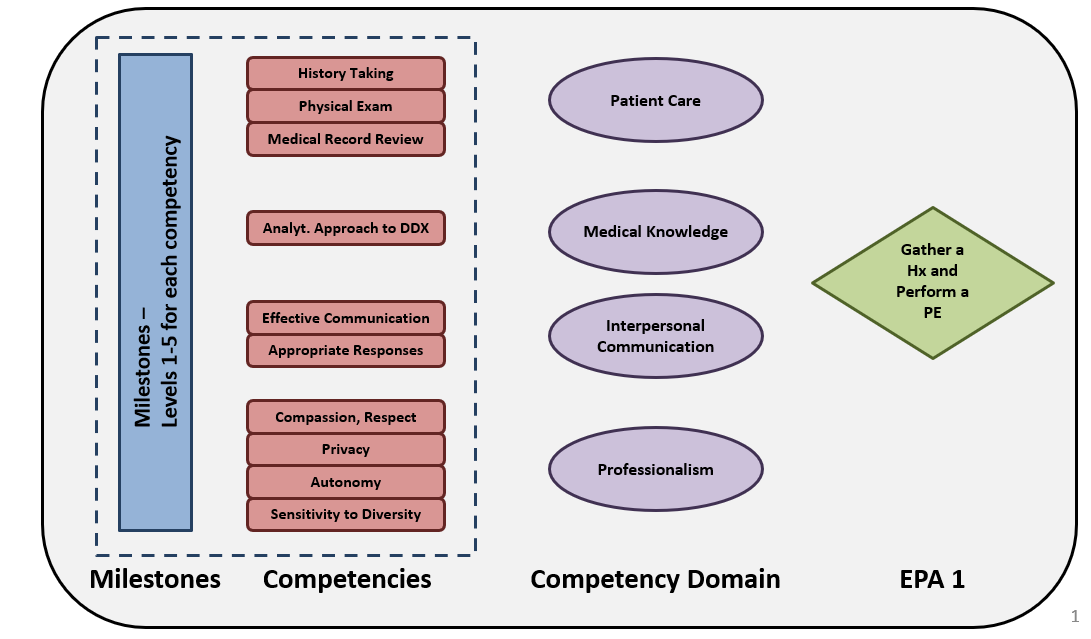
- Expectations for student progress are identified in all course syllabi—didactic and clinical—with milestones for each level of competence serving as rubrics for assessment. Timeframes for achieving competence are delineated for each competency and EPA through a Milestones and Progress grid - or MAP.
Clinical Rotations
The RVU PA program clinical curriculum supports competency development through its rotation offerings.
Rotations may range in length between 2 and 12 weeks. Locations may include Denver-Metro greater Colorado areas (e.g., Ft. Collins, Colorado Springs, Alamosa, etc.), Arizona, Utah, Wyoming, and Kansas.
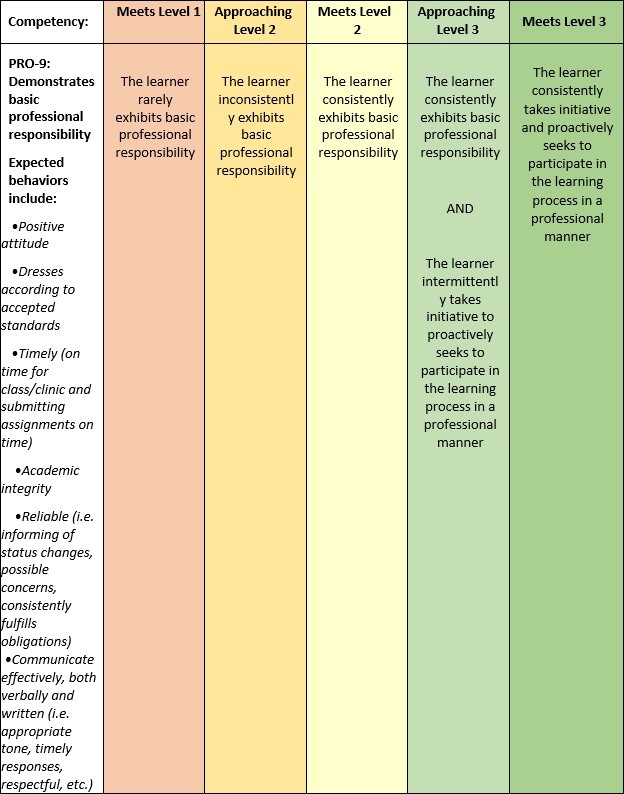
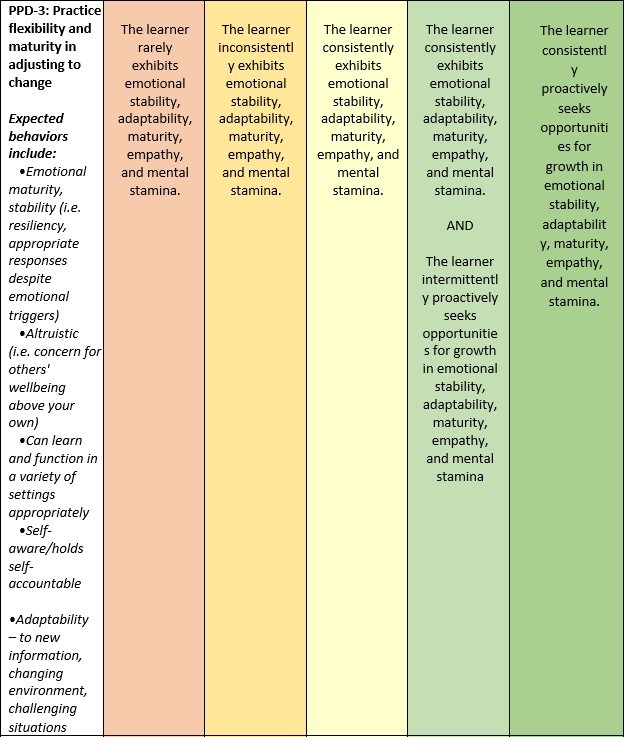
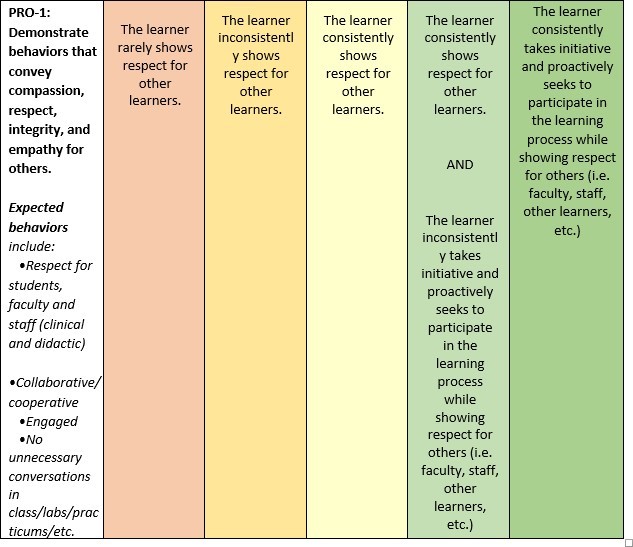
Professional Development Assessment Tool (PDAT Rubric)
Technical Standards
Introduction
Rocky Vista University (RVU) maintains a strong institutional commitment to equal educational opportunities for qualified applicants and students with disabilities. We collaborate with students to develop innovative ways to ensure accessibility and strive to create a respectful, accountable culture through our confidential and specialized disability support. Technical standards are required to engage in the program fully. Students’ competency related to learning objectives throughout and pertaining to their level of education will be addressed by the individual program. These technical standards are not intended to deter any candidate for whom reasonable accommodation will allow the fulfillment of the complete curriculum. RVU encourages students with disabilities to disclose and seek accommodations.
Seeking Americans with Disabilities Act (ADA) Accommodations
Prospective and enrolled students seeking accommodations engage in an interactive and confidential process with a Disability Officer to determine reasonable accommodations to ensure equal access. This process is informed by RVU’s commitment to inclusive excellence and the knowledge that students with varied types of disability can become successful healthcare professionals. Students are encouraged to submit requests for reasonable accommodations as early as possible, given the time required to process those requests. Accommodations may not be applied retroactively and may not fundamentally alter the nature and objectives of the program. Additionally, accommodations are generally not provided while requests are being reviewed/processed. Therefore, early disclosure is strongly encouraged for those requesting disability-related adjustments or modifications.
If you are an applicant, accepted student, or enrolled student with a disability who may require accommodations, we encourage you to contact the Office of Disability Services via dss@rvu.edu Additional information regarding disability resources at RVU is available on our website.
Fulfilling Technical Standards
RVU approaches technical standards and accommodations on a non-discriminatory basis that is consistent with our values of equity and inclusion. This approach is also in accordance with legal requirements as outlined in the Americans with Disabilities Act of 1990, the Americans with Disabilities Act, as amended, and the Rehabilitation Act of 1973, as amended. To matriculate and remain in an RVU educational program, the specific program’s technical standards (delineated below) must be met with or without reasonable accommodations (i.e., students who have and students who do not have accommodations must meet all applicable technical standards). Students must be able to participate in all required activities necessary to meet the educational objectives of each course and of the collective program. While enrolled at RVU, fulfilling the technical standards does not guarantee that an applicant, student, or graduate will be able to fulfill the technical requirements of any specific residency program, employment, future training programs, or other pursued opportunities.
Immunizations
Students must satisfy all immunization requirements at the time of admission and throughout their time at RVU. Failure to do so will prevent matriculation or, in the case of an enrolled student, lead to dismissal. For specific information, please see "Health Records/Immunizations" in the Student Educational Records section of this Handbook.
Observation
Students must be able to obtain, gather, and synthesize information in didactic and clinical settings. This includes but is not limited to, lectures, lecture supplemental materials, labs, physical exams, interviews, and raw diagnostic representations of physiologic data (e.g., radiology images, echocardiograms, ECGs, lab results, and microscopic images).
Communication
Students must be able to communicate with others to elicit information, detect mood and activity changes, and establish a therapeutic relationship. Students must exhibit interpersonal skills to communicate with others accurately. Students must be able to clearly, accurately, and sensitively record information obtained through communication. Students must demonstrate effective communication, participation, and collaboration with all healthcare and educational team members across various communication mediums (e.g., in-person, Zoom, written). English is the primary language of the RVU PA program curriculum, and students are expected to have a level of proficiency that eliminates language as an access barrier.
Motor
Due to the clinical nature of the RVU PA program, all students must be able to coordinate gross and fine muscular movements, balance, and equilibrium. They must also be able to complete a comprehensive physical examination, perform diagnostic maneuvers, provide general care to patients, and provide/direct emergency treatments.
Intellectual, Conceptual, Integrative, and Quantitative Abilities
Students must possess conceptual, integrative, and quantitative abilities, including measurement, calculation, reasoning, analysis, and synthesis. Problem-solving, the critical skill necessitated by all RVU programs, requires these intellectual abilities. In addition, students must be able to observe and comprehend three-dimensional relationships and understand the spatial relationship of structures. Students must be present, engage, and participate in all required activities necessary to achieve the activity objectives and outcomes. Students must be capable of extended periods of intense concentration and attention.
Behavior and Social Abilities
Students must have the emotional health required for full use of their intellectual abilities, the exercise of good insight and judgment, and the prompt completion of all responsibilities attendant to the demands of the educational program. Students must have the capacity to develop mature, sensitive, and effective relationships with members of the internal and external RVU community (e.g., peers, faculty, staff, patients, and healthcare professionals). Students must be able to function as part of a healthcare team and participate in a multi-disciplinary environment. Students must be able to accept constructive feedback, demonstrate accountability, and take responsibility for improving personal performance and team interactions. Students must be able to tolerate physically and mentally taxing workloads and to function effectively under stress. Students must adapt to changing environments, display flexibility and professionalism, and function and perform in the face of uncertainties inherent in the clinical nature of the RVU PA program.
Ethical and Legal Responsibilities
Students must maintain, demonstrate, and display high ethical and moral behaviors commensurate with being productive, compassionate, and professional members of society in all interactions (e.g., faculty, staff, peers, patients, and the public). Students are expected to have the cognitive ability to understand the legal and ethical aspects of the PA profession. They must recognize the limitations of their skills, authority, and authorization within the practice context.
Safe Student Policy
If an RVU Physician Assistant Program student is suspected or determined to be unsafe due to a temporary or permanent inability to meet the Technical Standards, the Program’s Student Assessment and Promotions Committee (SAPC) is required to act to ensure a safe environment for students, patients, and other personnel. It is the duty of all faculty, students, and staff to report to the Chair of the SAPC (or their designee) concerns that a student is acting in a manner that could jeopardize patient safety. These observations may occur within or outside of a clinical practice environment.
Upon receipt of a report of potential unsafe behavior, the Chair of the SAPC (or their designee) will investigate and determine whether immediate action is necessary to remove the student from a clinical and/or academic environment. Should removal from either the clinical or academic environment be deemed necessary, the Chair will convene a meeting of the SAPC to determine the most appropriate action.
Actions may include, but are not limited to, external professional evaluation from a peer assistance group such as the Colorado Physician Health Program (CPHP), remediation, referral to the SAPC for consideration of a professionalism violation, restriction of practice, removing/transferring a student from a clinical rotation, restricting a student from clinical rotations, and/or other actions necessary to address the unsafe situation or concerns. Professional evaluations may include the assessment of the student in question by a variety of professionals, including healthcare providers, mental healthcare providers, drug and alcohol counselors, English as a Second Language instructors, the campus Disability Resource Officer, and/or other professionals as deemed appropriate by the SAPC.
It is the student’s responsibility to undergo evaluation if required. If the student does not complete the requirements, they will not be allowed to proceed in the curriculum, and their refusal will be referred to the SAPC for review.
The SAPC, in conjunction with the student’s advisor, will serve to assist the student in arranging for the appropriate evaluation (or ongoing evaluation) or any other remedial actions required. Other remedial actions may include, but are not limited to, taking no further action, modifying the student’s educational plan, requiring mandatory changes in student behavior, requiring the student to take a leave of absence from the program to address specific concerns, or withdrawing the student from their educational experience.
For any issues arising out of the application of this policy, the student may request a review by the Program Director by written request within five (5) business days of learning of the proposed action. During the appeals process, the Program Director will not reconsider the facts and statements upon which the original decision was based, but will consider only:
- Whether new information regarding the status of the student has been discovered, previously unknown to the student or to the Program
- Whether there is an allegation of discrimination as determined by the appropriate Institutional Office
- Whether there is evidence of a procedural error in the SAPC’s review that prejudiced the student’s ability to receive a fair decision; or
- Whether there is evidence that the SAPC acted in an arbitrary or capricious manner.
The Program Director, or designee, may affirm or reject the SAPC’s decision or refer the matter back to the SAPC for further consideration. The Program Director’s decision is final.
The Physician Assistant Concept
In the early 1960s, physicians and educators recognized the declining number of general practitioners and the maldistribution of physicians as they moved away from rural areas. Dr. Charles Hudson was one of the first to conceptualize the physician assistant (PA), presenting this model to the American Medical Association in 1961. In 1965, Dr. Eugene A. Stead Jr. launched the first PA program at Duke University, and the first PA graduated on October 6, 1967.
Physician assistants are clinical professionals trained in both academic and clinical settings using the medical model developed for physicians. PAs are licensed clinicians authorized to make clinical decisions and provide a broad range of diagnostic, therapeutic, preventive, and health maintenance services. They are committed to team-based patient care, collaborating with physicians and other healthcare team members to optimize patient outcomes. PAs practice in primary and specialty care in various medical and surgical settings and may also engage in education, research, and administration.
PAs are educated in rigorous programs accredited by the Accreditation Review Commission on Education for the Physician Assistant (ARC-PA). Collaborating organizations, including the American Academy of Family Physicians, the American Academy of PAs (AAPA), the American Academy of Pediatrics, and many others, work with ARC-PA to establish and maintain quality standards for entry-level PA education.
The professional curriculum includes the basic medical, behavioral, and social sciences, clinical medicine and patient assessment, supervised clinical practice, and health policy and professional practice issues. Core clinical rotations typically cover internal medicine, family medicine, general surgery, pediatrics, obstetrics and gynecology, emergency medicine, and behavioral health, while elective rotations may explore additional medical and surgical specialties.
Upon graduation, PAs must pass the Physician Assistant National Certifying Examination® (PANCE), developed by the National Commission on Certification of Physician Assistants (NCCPA) in collaboration with the National Board of Medical Examiners. The NCCPA's Board of Directors includes certified PAs, physicians, and public representatives. To obtain state licensure, graduation from an accredited PA program and passing the PANCE are required.
PAs continue to learn through clinical practice and ongoing medical education. The scope of practice adapts over time due to advances in medical knowledge, changes in practice settings, or modifications in state regulations. Several postgraduate educational programs across the U.S. provide advanced clinical training in medical and surgical specialties for practicing PAs. A PA's responsibilities vary depending on practice setting, education, experience, and state laws and regulations.
Certification of Physician Assistants
As the concept of new healthcare practitioners gained acceptance, state legislatures began formulating statutes to integrate these professionals into the healthcare delivery system. Thus, the need for a nationally standardized method to evaluate PA proficiency became apparent, particularly in states requiring credential reviews by regulatory agencies. In response, the American Medical Association and the National Board of Medical Examiners developed a national certifying examination for PAs, with the first exam administered in 1973.
The original members of the independent National Commission on Certification of Physician Assistants (NCCPA) included representatives from organizations such as the American Academy of Family Physicians, the American Academy of Pediatrics, AAPA, and others. The NCCPA ensures the public that physician assistants are competent through entry-level and recertification examinations and the completion of continuing medical education (CME). Current certification requirements for PAs include:
- Graduation from an accredited PA program
- A passing score on the Physician Assistant National Certifying Examination® (PANCE)
- Completion of approved CME every two years
- A passing score on the Physician Assistant National Recertifying Exam® (PANRE) or the Physician Assistant National Recertifying Exam-Longitudinal Assessment (PANRE-LA®) every 10 years.
In summary, the PA profession is dedicated to providing high-quality healthcare by following organized accreditation processes, certifying graduate competency, and engaging in continuing medical education.
Professional Title Change
The PA scope of practice has evolved since the profession's inception in 1965. A perceived gap between the profession's title and the roles PAs assume in daily practice became evident. In 2018, the national professional society for PAs, the Academy of Physician Assistants (AAPA), initiated a Title Change Investigation to address this gap. The findings were discussed and debated by the AAPA House of Delegates (HOD), with input from the NCCPA, the Physician Assistant Education Association (PAEA), and the ARC-PA. In May 2021, the AAPA HOD passed a resolution adopting “physician associate” as the official title of the profession, resulting in the AAPA’s official name change to the American Academy of Physician Associates.
The NCCPA acknowledges this decision, regarding the titles “physician assistant,” “physician associate,” and “PA” as synonymous. PA practice, including the profession's name, is regulated at the state level. The NCCPA recognizes that the PA title, the PA-C credential, the national certifying body, and the certifying exam are mentioned in many state statutes and regulations, as well as federal regulations. Transitioning the PA title will take time and will require updates to state legislation and regulations. Until the official name is updated, the title "physician assistant" will remain in use in the respective state.
The NCCPA and the ARC-PA maintain "physician assistant" in their organizational titles. A professional title change does not impact the PA’s scope of practice, which remains determined by the PA's education, clinical experience, practice setting, and relevant state laws and regulations. The terms “physician associate,” “physician assistant,” and “PA” all signify the same professional role.
The Physician Assistant Guidelines for Ethical Conduct
The American Academy of Physician Associates (AAPA) recognizes its responsibility to support the profession in maintaining high standards for quality and accessible healthcare services. The PA profession has revised its code of ethics multiple times since its inception. While the fundamental principles of ethical care have remained constant, the societal context in which these principles are applied is continuously evolving. Economic pressures, social influences on healthcare, technological advancements, and changing patient demographics regularly reshape the environment in which PAs practice.
Previous iterations of the profession's code were brief lists of tenets for PAs to follow. The AAPA has shifted from this format by detailing how these tenets apply to PA practice. Each situation is unique, requiring individual PAs to exercise their best judgment while considering patient preferences, healthcare team dynamics, clinical data, ethical principles, and legal responsibilities.
Four main bioethical principles guided the development of these guidelines:
- Patient Autonomy: Patients have the right to make independent decisions, and PAs should respect those decisions.
- Beneficence: PAs should act in the best interests of their patients, which sometimes involves balancing respect for autonomy with promotion of well-being.
- Nonmaleficence: PAs are obligated to do no harm and impose no unnecessary burden on patients.
- Justice: Patients in similar situations should receive similar care, and principles of justice apply to the equitable distribution of healthcare resources.
PAs are expected to behave both legally and ethically, understanding local, state, and federal laws governing their practice, as well as their ethical responsibilities as healthcare professionals. Legal requirements and ethical expectations may not always align; generally, law outlines minimum acceptable behaviors, while ethical principles set the highest moral standards.
Statement of Values of the PA Profession
- PAs prioritize the health, safety, welfare, and dignity of all individuals.
- PAs uphold the principles of patient autonomy, beneficence, nonmaleficence, and justice.
- PAs recognize and promote diversity.
- PAs do not discriminate and treat all individuals seeking care equally.
- PAs maintain confidentiality regarding patient-specific information shared during medical practice.
- PAs actively pursue ongoing learning and skill development, staying updated on advancements in medicine.
- PAs evaluate their own capabilities and limitations, striving to enhance their practice.
- PAs collaborate with healthcare team members to provide compassionate and effective patient care.
- PAs contribute to community health and public health improvement through their knowledge and experience.
- PAs respect professional relationships with all healthcare team members.
- PAs share and enhance clinical and professional knowledge with peers and PA students.
Physician Assistant Professional Oath
I pledge to perform the following duties with honesty and dedication:
- I will primarily focus on the health, safety, welfare, and dignity of all individuals. I will uphold the principles of patient autonomy, beneficence, nonmaleficence, and justice.
- I will recognize and promote the value of diversity, treating all individuals seeking my care equally.
- I will maintain confidentiality regarding patient information shared in the course of practicing medicine.
- I will assess my own capabilities and limitations, always striving to improve my medical practice.
- I will actively pursue the expansion of my knowledge and skills, keeping up with medical advancements.
- I will collaborate with other healthcare professionals to provide compassionate and effective patient care.
- I will utilize my knowledge and experience to contribute positively to the community.
- I will maintain a respectful professional relationship with all healthcare professionals.
- I will share and enhance knowledge within the profession.
These duties are pledged sincerely and upon my honor.
Physician Assistant Professional Organizations
American Academy of Physician Associates
2318 Mill Rd., Ste.1300, Alexandria, VA 22314
703/836-2272; www.aapa.org
Founded in 1968, the American Academy of Physician Associates (AAPA) is the national professional society for PAs. It represents over 168,000 PAs across all medical and surgical specialties in all 50 states, the District of Columbia, U.S. territories, and the uniformed services.
The AAPA's mission is to ensure the professional growth, personal excellence, and recognition of PAs, supporting their efforts to enhance the quality, accessibility, and cost-effectiveness of patient-centered healthcare. As the official organization of the PA profession, the AAPA is recognized by other medical associations and government entities as a key advocate for PAs and PA students.
The AAPA's governance structure includes a Board of Directors responsible for strategic, administrative, and financial management, while the House of Delegates (HOD) serves as the policy-making body representing the interests of AAPA members. The HOD has the sole authority to enact policies that reflect the collective values, philosophies, and principles of the PA profession.
Independent organizations affiliated with AAPA include Constituent Organizations (COs), which provide local continuing medical education (CME) programs, networking opportunities, and advocacy for PAs. These COs represent state chapters, PA specialty organizations, special interest groups, and caucuses. Other AAPA bodies include the Physician Assistant Foundation and the Student Academy, both of which operate with their own boards and committees.
The AAPA collaborates with three other national organizations related to PAs to provide resources that support PAs and the profession: the National Commission for Certification of PAs (NCCPA), the Accreditation Review Commission on Education for the Physician Assistant (ARC-PA), and the PA Education Association (PAEA).
Student Academy of the American Academy of Physician Associates
950 N. Washington St., Alexandria, VA 22314-1552
(703) 836-2272
Email: students@aapa.org
http://saaapa.aapa.org
The Student Academy of the American Academy of Physician Associates (SAAAPA) is a unique component of AAPA, established in 1978 with its bylaws, a Student Board of Directors, and a legislative and policy-making body. SAAAPA’s members consist of registered student societies from each accredited PA program. Student members of SAAAPA are also members of AAPA. Student perspectives are voiced through their PA program’s student society representative to the Student Academy’s Assembly of Representatives (AOR), which is SAAAPA’s legislative and policy-making body that meets annually during the AAPA conference.
In addition to representing students at local, regional, and national levels, SAAAPA partners with the PA Foundation to support patient-centered, community-based health projects through grants, fellowships, and scholarships for students. Student membership dues for AAPA and SAAAPA are one-time fees and expire four months after a student’s graduation.
Specialty Organizations and Caucuses
PA specialty organizations and caucuses consist of PAs, PA students, and individuals with a common interest in clinical specialties or healthcare issues. Many of these organizations offer student benefits, including scholarships. A current list of specialty organizations and caucuses can be found at aapa.org.
PA Education Association
655 K Street NW, Ste 700, Washington, DC 20001
703/548-5538; http://www.paeaonline.org
The PA Education Association (PAEA) is the only national organization in the United States representing PA educational programs. Founded in 1972, PAEA provides services for faculty at its member programs, as well as for applicants, students, and other stakeholders. Its mission is to advance excellence in PA education through leadership, scholarship, equity, and inclusion.
The PAEA's goals include:
- Being the primary source of educational resources and professional development for PA educators.
- Educating and inspiring programs to prepare the next generation of PAs to deliver quality patient care representative of the nation’s diverse population.
- Eliminating systemic racism and bias in PA education.
- Sustaining and strengthening a positive organizational culture and operational framework.
PAEA is governed by a 12-member Board of Directors, elected by the member programs. These voting members consist of PA educational programs accredited by ARC-PA. They contribute to PAEA policy and initiatives, ensuring alignment with the broader strategy. Board committees, task forces, and workgroups composed of PAEA members address policy matters and strategic initiatives pertinent to PAs and PA education.
PAEA created and maintains the Central Application Service for PAs (CASPA), enabling prospective applicants to submit one secure online application to various PA programs of their choice. This service has been available since 2001.
PAEA also supports resources essential for maintaining high-quality PA education, including objective self-assessment tools for student and curricular evaluation, such as the PA Clinical Knowledge Rating and Assessment Tool (PACKRAT), End of Rotation exams, and End of Curriculum exams. The organization publishes study resources for PA re-certification, sponsors educational sessions for educators and students, and conducts workshops for specialized faculty education.
Colorado Academy of Physician Associates
720/880-7657; http://www.coloradopas.org
The Colorado Academy of Physician Associates (CAPA) is the AAPA's constituent organization representing PAs in Colorado. Established in 1976, CAPA is a non-profit organization dedicated to promoting the PA profession within Colorado's medical community and advocating for access to quality healthcare. CAPA provides high-quality continuing medical education for PAs.
CAPA represents Colorado PAs before the Colorado State Legislature and the Colorado Medical Board, monitoring their decisions and disseminating information. It also serves as a resource for healthcare companies, medical education programs, and community initiatives.
A Board of Directors governs CAPA, acting on behalf of the PA members. The CAPA Board consists of voting members, including the President, President-Elect, Immediate Past President, Secretary, Treasurer, Chief Delegate, five Directors-at-Large, and one Student Director. Non-voting members include Committee Chairs, Delegates, and Student Representatives. CAPA Student Representatives are elected from each Colorado PA program and are active members of the CAPA Student Affairs Committee. CAPA members elect delegates to participate in the AAPA’s House of Delegates and attend the annual HOD meetings.